Why I'm Starting a Blog in the Era of Short-Form Video Content (And Why You Should Too)

I know what you're thinking. "Lauren, it's 2025. TikTok runs the world. Instagram Reels are everywhere. Why on earth are you starting a BLOG?"
Valid question. Honestly, I asked myself the same thing about three months ago when I was sitting in my office at 11 PM, laptop open, toddler finally asleep, and my husband asking me why I wasn't just batch-creating Reels like every other marketer.
Here's the thing: I noticed something weird happening.
I stopped Googling things.
Not completely—but the way I search for information has fundamentally changed. And I'm not alone. Instead of typing "best waterproof mascara" into Google and scrolling through ad-heavy listicles written by people who've never worn mascara in their lives, I started asking ChatGPT.
"What's the best affordable mascara for someone with sensitive eyes who also works out a lot?"
And it gave me actual, helpful answers. With context. With reasons. Sometimes even with links to real reviews from real people.
That's when it hit me: blogs are coming back. But not in the way they existed before.
The Search Behavior Shift Nobody's Talking About
Let me hit you with some stats that made me rethink my entire content strategy:
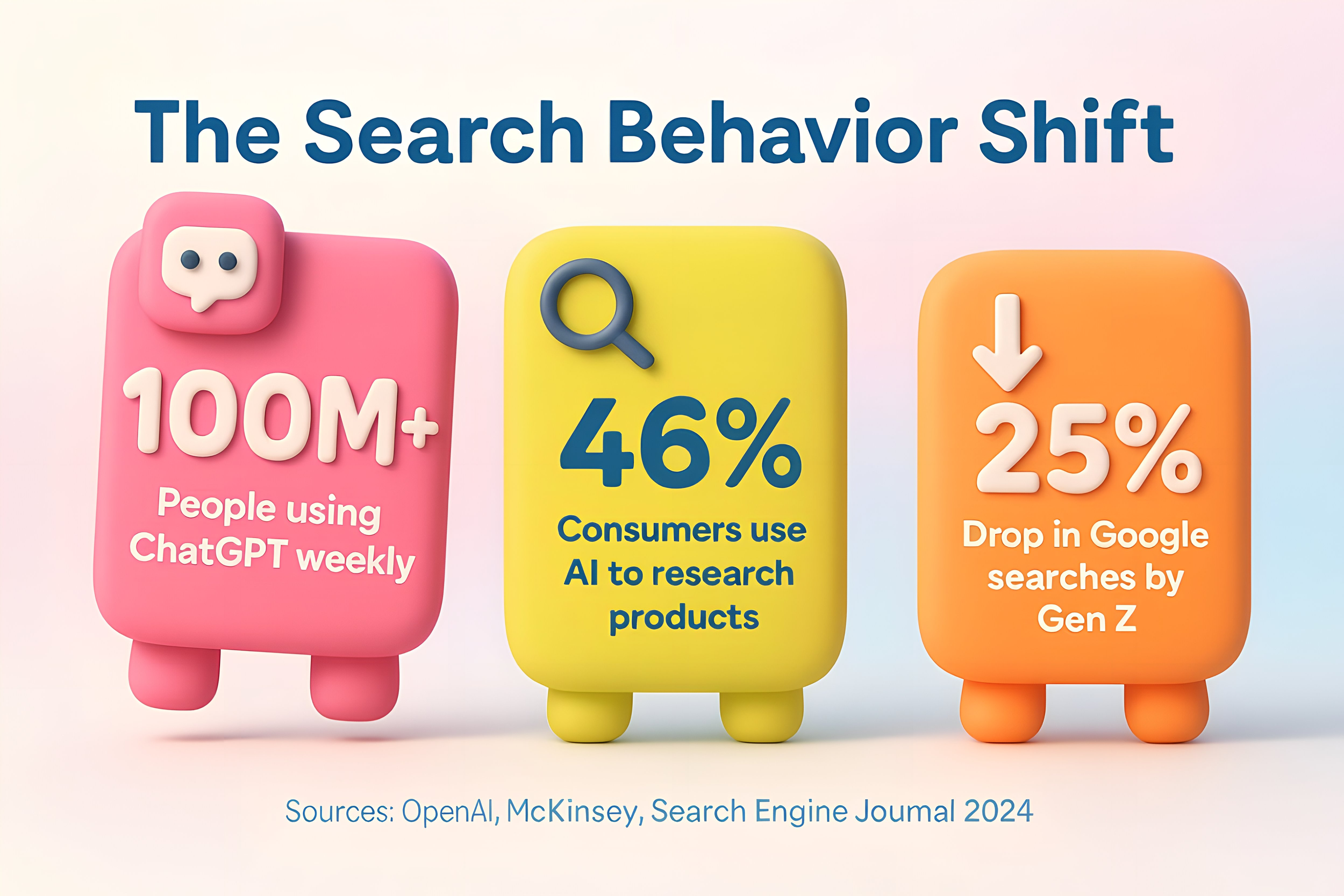
Over 100 million people are using ChatGPT weekly as of 2024 (OpenAI)
46% of consumers now use AI tools like ChatGPT to research products before purchasing (McKinsey, 2024)
Traditional Google searches are down 25% among Gen Z users, who are turning to AI chat interfaces and social search instead (Search Engine Journal, 2024)
We're living through a massive shift in how people find information. And here's the kicker: AI doesn't pull answers out of thin air. It pulls them from existing content on the internet.
Which means if your business, your brand, your expertise ISN'T documented somewhere online in a way that's authentic, detailed, and helpful... you're invisible.
The Evolution of Blogs (And Why That Matters)
Let's be real for a second. When most people think "blog," they picture one of two things:
Those cluttered, ad-riddled websites from 1997 that looked like a geocities fever dream
The keyword-stuffed, soulless SEO articles from 2015 written by someone who clearly hated their job
Neither of those exist anymore. (Thank god.)
The blogs that are winning in 2025 (& likely in 2026) look completely different.
They're visual. They're personal. They're designed like actual websites, not digital diaries. They have personality, opinions, and—here's the key—they sound like they were written by an actual human being.
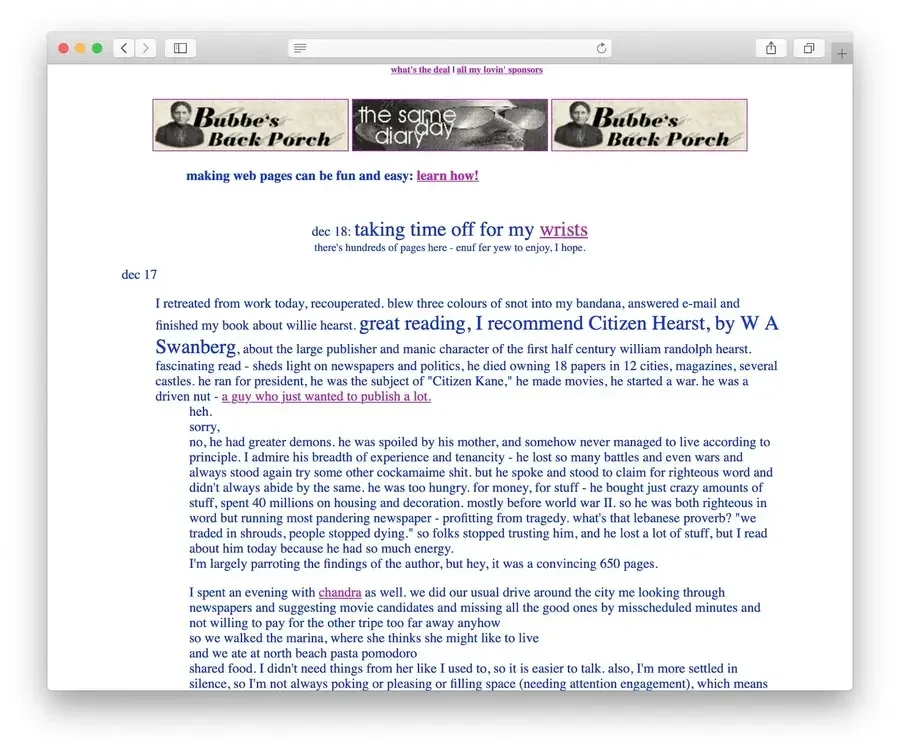
Blogs Then (circa 1997)

Vs. Now
Why Blogs Are the New SEO Goldmine (Yes, Really)
Here's what most people don't realize about ChatGPT and AI search tools: they LOVE long-form, helpful, authentic content. They prioritize:
✅ Personal experiences and first-hand reviews
✅ Detailed breakdowns with context
✅ Content that answers why, not just what
✅ Real opinions from real people (not AI-generated fluff)
You know what checks all those boxes? A well-written blog.
Not the keyword-stuffed, robotic SEO garbage from 2015. I'm talking about real stories, real opinions, and real expertise—the kind of content that makes someone go, "Oh damn, this person actually knows what they're talking about."
And guess what? That's exactly the kind of content ChatGPT pulls when someone asks it for recommendations.
What "ChatGPT Search Optimization" Actually Means
Okay, so if we're calling this a strategy (and we are), let's break it down:
ChatGPT Search Optimization = creating content that AI tools can find, understand, and recommend to users searching for solutions you provide.
Here's how to do it:
4 Ways to Optimize Your Content for ChatGPT Search
-
ChatGPT is trained to detect and prioritize content that sounds real. That means you need to ditch the corporate jargon and robotic SEO speak.
Here's what that looks like:
Use first-person storytelling - "I tried this and here's what happened" beats "This product offers premium quality solutions" every time
Share personal experiences - Give specific examples, not vague generalizations
Be conversational - Write like you're texting a friend, not submitting a thesis
Actually have an opinion - Hot takes are memorable. Lukewarm "this product is nice" content is not.
If your content sounds like it was written by a robot, AI will skip right over it in favor of something that sounds like it came from an actual person.
-
Think about how people actually search now. They're not typing "best mascara" anymore. They're asking full questions with context:
"What's a good marketing agency for small businesses in California?"
"How do I know if UGC content is worth it for my brand?"
"What are the best tools for someone starting a blog in 2025?"
Your blog should answer these questions the way you'd answer a friend over coffee—with context, honesty, and real examples from your own experience.
Pro tip: Go into ChatGPT and ask it questions your ideal client would ask. See what it recommends. If your content isn't showing up (or if the answers sound nothing like what you'd say), that's your cue to create better content.
-
If you're only showing up in Instagram Stories that disappear in 24 hours, you're not discoverable. ChatGPT can't pull from your IG Story.
It CAN pull from:
✅ Your blog posts
✅ Your website pages
✅ Detailed product/service descriptions
✅ Long-form reviews and case studies
✅ FAQ pages and resource guides
This is why I'm building out my "My Honest Opinion" section—real reviews of products, tools, and experiences that people are actively searching for. It's UGC, but permanent. Searchable. Optimized for AI to find and recommend.
Think of your blog as your digital resume that never expires. The more quality content you have, the more chances AI has to recommend YOU.
-
Here's the truth nobody wants to hear: one blog post won't change your life.
But 20? 50? A year's worth of consistent, high-quality content that showcases your expertise?
That builds digital authority. And AI tools prioritize authoritative sources.
This means:
Publishing consistently (even if it's just once a week)
Going deep on topics you actually know about
Linking to credible sources and data
Updating old posts as things change
Building interconnected content (internal linking between your posts)
You're not just writing for today. You're building a library of knowledge that compounds over time. Every post is another way for someone (or some AI tool) to discover you.
How This Connects to My UGC Work (And Maybe Yours Too)
If you've been following me, you know I create UGC (user-generated content) for brands. I make the Reels, the TikToks, the scroll-stopping short-form videos that convert.
But here's what I've realized: that content needs a home base.
A brand can pay me to create 10 amazing Reels, but if there's no long-form content backing it up—no blog post, no detailed review, no "here's why this product actually changed my life" story—then we're missing a HUGE chunk of the search optimization puzzle.
So now, when I work with brands, I'm not just thinking about the 15-second TikTok. I'm thinking:
Where does this live long-term?
How do we make it searchable?
What's the blog post or landing page that supports this?
Because in 2025 and beyond, the brands that win are the ones that show up everywhere—in your TikTok feed AND when you ask ChatGPT for a recommendation.
So Yeah, I'm Starting a Blog. And You Should Too.
Not because it's trendy (it's definitely not).
Not because it's easy (it's actually harder than batching 20 Reels).
But because discoverability is the new currency, and blogs are how you stay relevant in the age of AI search.
If you're a small business owner, a content creator, a marketer, or literally anyone trying to build authority online—this is your reminder:
👉 Document your expertise.
👉 Share your real opinions.
👉 Make yourself findable.
The era of short-form content isn't over. But it's no longer enough.
Want to see how I'm putting this into practice? Check out my My Honest Opinion section where I review products, tools, and experiences with the same energy I'd bring to a group chat (but SEO-optimized, because duh).
And if you're a brand looking to create content that's not just viral, but discoverable—let's talk. Because I'm not just making Reels anymore. I'm building search-optimized content strategies that actually work in 2025.
Drop a comment: Have you noticed yourself using ChatGPT to search for things instead of Google? I want to know if I'm alone in this or if we're all living in the AI search era now.